07 / 11
Project Super Jumbo
The client was a new long-haul airline: funded, licensed, and eighteen months from its first flight. It had aircraft on order and no name it could say out loud. For fourteen months we knew it only by the codename on the non-disclosure agreement — Project Super Jumbo, after the double-deck aircraft it had ordered.
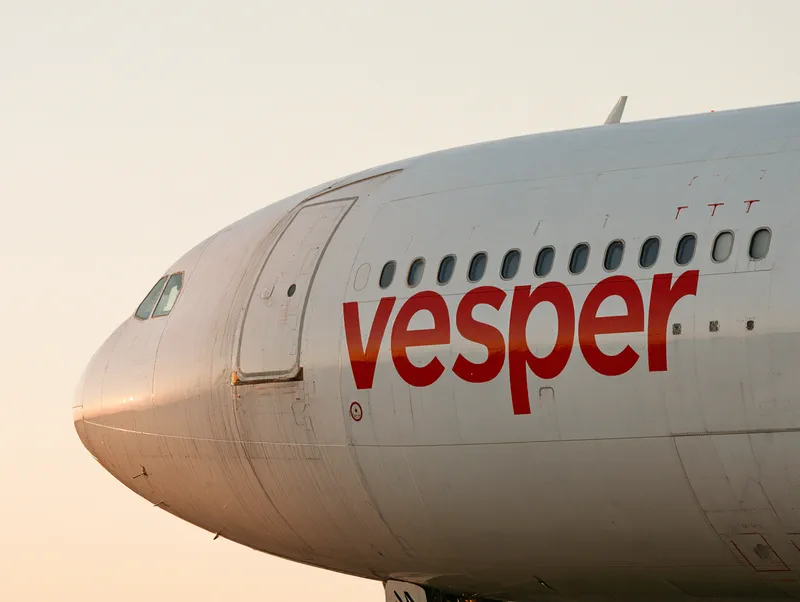
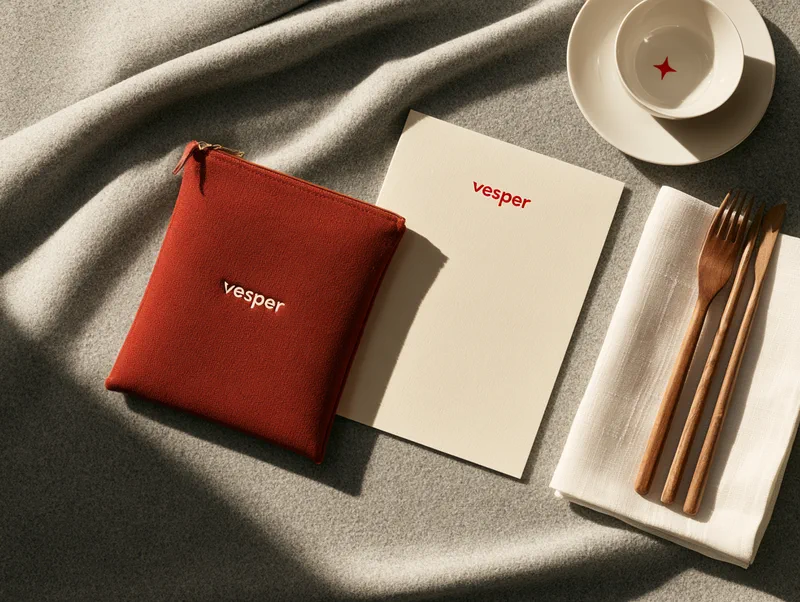
They needed everything a passenger would ever see: a name, a position in a crowded market, a livery, and a cabin identity. A brand that had to work at seventy-three metres long and on a sugar sachet.
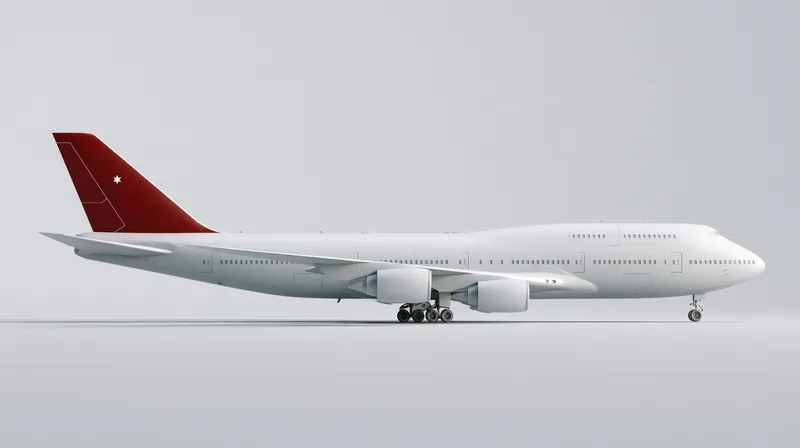
Livery study — one of forty-one tails tested in 3D before any paint was mixed
V. gave the team one instruction: design the tail first. It is the only part of an airline most people ever see — through a terminal window, from a taxi, in the corner of a news photograph — and everything else could follow from it.
Edward's strategy found the gap. The airline's routes were almost all overnight, and every competitor sold the destination; nobody was selling the night itself. Jean's name came from there: Vesper, the evening star, the first light you see on an evening departure.
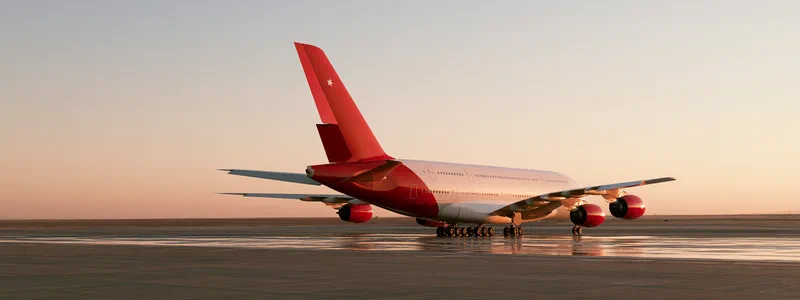
Riley's art direction kept the aircraft almost bare: a white fuselage, one vermilion tail, a single four-pointed star, and no swoosh. Janesh built the aircraft in 3D from the manufacturer's drawings and tested forty-one tails in dawn, noon, dusk and rain, so the decision was made in the light the aircraft would actually live in.
The name was announced eleven weeks before the first flight. The reveal image that ran in the press was one of Janesh's renders — the first aircraft was still in the paint hangar — and nobody asked.
The cabin identity now runs from the amenity kits to the safety card, and the vermilion tail has been ordered for the airline's next six aircraft without a line of it changing.
Selected work